
Get involved, for a better Roma policy!
In Serbia, the Roma community is seen as a community that has little or no political power. Although according to unofficial data, we represent the largest and youngest national minority in politics, we are not present and our needs are not respected. The question is, has Roma policy yielded results for the Roma community in the last few years and decades, or is our greatest success the fact that in 1971 we determined our flag, anthem, and the word Roma? Some in the community say Roma policy does not exist, while most
states that Roma policy does not give results for us because Roma leaders primarily think about personal interests, projects, others allege the existence of discrimination which, even when there are attempts to develop Roma policy, blocks its results and there is a general political context that makes it invisible. Non-Roma, tell us how we should be educated and work and then talk about politics. The fact is that politics is an integral part of our daily lives. When asked why Roma policy does not work, we should think in two directions: what are the external factors that affect our policy and its results, and on the other hand, what we as a community have been doing for decades, which reduces the results of Roma policy and how we can do better.
We, Roma, are part of a broader social and political context, all the decisions we want to make are not isolated and cannot be resolved without the participation of other political actors or outside the system of our country. In the political system we live in, the issue of the Roma community is not even a priority to be resolved, it is somewhere at the bottom of the list. Our problems are big and different: from education to employment, infrastructure, culture. For the general policy of our country, these are the most difficult issues for all politicians and authorities who come they leave and our problems remain. States do not have the strength or the will to substantially solve the problems of the Roma, primarily because it is a large investment, and on the other hand, because they would lose the sympathy of their voters from other nations, which are more in individual municipalities than us. Our community is not stationed in a certain part of Serbia, but we are everywhere, which prevents our better political organization. There are the most Hungarians in Vojvodina, Albanians in Bujanovac and Presevo, and there are more of us in all municipalities, somewhere less, but again rarely where we cross 10-15% of the municipal population. However, although we are not stationed in one place, according to unofficial data, we are still the largest national minority in Serbia.
How can we Roma as a community better organize ourselves and be creators of Roma policy? The solution to all our problems that we often hear from Roma leaders and the community is unification. However, what does that unification mean and what do we unite for? Are we going to have the same attitude about religion, so if someone thinks that Christians are not real Roma, we should all agree on that, because that is impossible. No nation or people is united without a reason or without some priority that we all see as important. What we Roma need is a political organization around a problem that is important to everyone and for which we will all fight, and that is a precondition for any success and our greatest strength. An integral part of political organization is the support of the community, it has always been the strength of politicians and a symbol of the power of a society, if the people knew what power they have, they would protest against every decision with which they do not agree and change the Government annually, if necessary. We have seven Roma political parties and several NGOs that see each other as angry opponents instead of healthy competition but with the same goal. What they have in common is that whoever has been involved in Roma politics so far has not taken into account the community he is fighting for. Rapid research of needs and requirements, often adapting to politicians or donors, created quick plans on how to improve the position of the Roma community without the community knowing it. Roma individuals are fighting a battle on the front with great politicians and losing. Every true Roma leader has a community behind him that will not allow him or her to fall, and that leader will not allow the interests of the community to remain silent or just in someone's drawer.
We, Roma, do not use all the resources and potentials we have as a community. When we think of someone who deals with Roma politics, who comes to mind first? If you imagine a man, middle-aged or older, then you have excluded more than half of the Roma community, whose qualities can contribute to development and progress. Roma women hardly talk about Roma politics at all, nor are they involved in political currents that can contribute to the community by representing the interests of the female part of the Roma community but also contributing to the community as a whole. On the other hand, the voices of young Roma men are suppressed because they see themselves as incompetent to advocate for the interests of their community. Under the pretext that they have no experience or knowledge, they were rejected, which greatly affects the results of the Roma policy.
However, an organized community that uses all the potentials of its members is not enough to win the battle for a better tomorrow, we need knowledge, analysis of the law, broad media communication. We cannot come up with a wish list in front of decision-makers and say that the Roma community wants that, especially because politicians are running away from popular decisions for Roma if other nations rebel. Someone must investigate our laws, see what is possible in the country in which we live and what will bring good to us and Serbia. With these arguments, someone from the community should go before the decision-makers and advocate for the interests of the whole community. In the end, all that should be followed in the online space where everything is written down and what the politicians promised, and all the successes of the Roma community. Finally, it is impossible to do any of this if we Roma are waiting for someone else to do this for us.
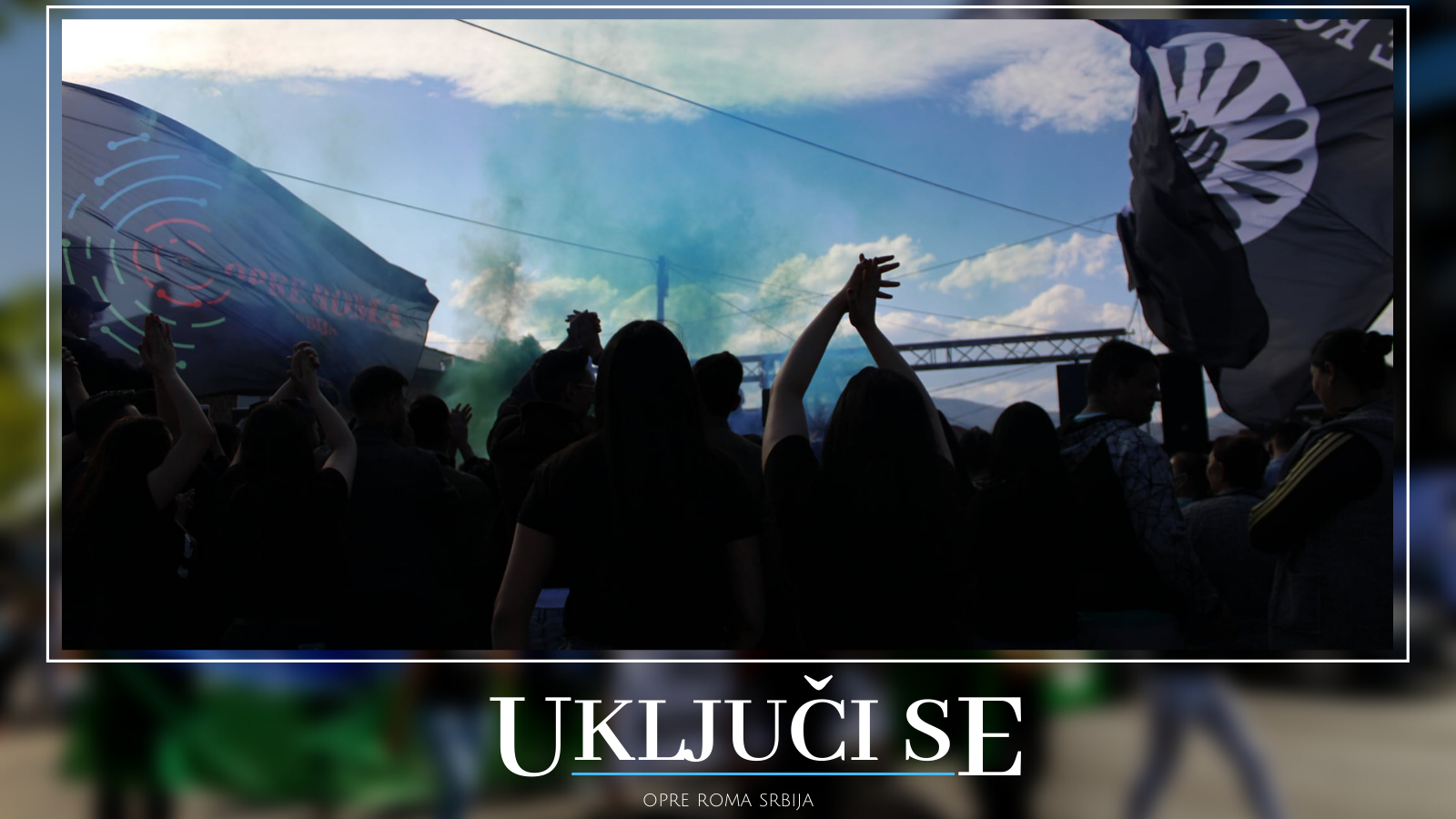
With these ideas, the Opre Roma Serbia movement was created in 2019. Recognizing the importance of involving our community in determining the problems we deal with, we have developed four teams on the move: a community organizing team whose role is to work for the community on the ground and identify community problems and requirements and actively involve them in solving them. aims to research the law, budget, and other documents that will help us find a way to solve the problem we have identified with the community, an advocacy team whose goal is to advocate or present community issues to decision-makers with adequate arguments and a communication team that promotes community on social networks and also uses online space to create public opinion. The Roma ORS movement includes all groups from the community in its work and arlije, gurbeti, blacksmiths and Muslims, Christians, Protestants, and women and youth, and anyone who believes that a better life for Roma is possible and who wants to fight for it.